
The complete guide
How to Choose a Gym Duffle Bag That Actually Keeps Your Kit Separate
The problem with most gym bags
Think about the last time you emptied your gym bag at home. There was probably a damp towel somewhere near the bottom, a pair of trainers that had been pressed against a clean t-shirt, and a set of keys that took three goes to find. One big open space is fine for carrying things from A to B, but it is terrible at keeping those things apart.
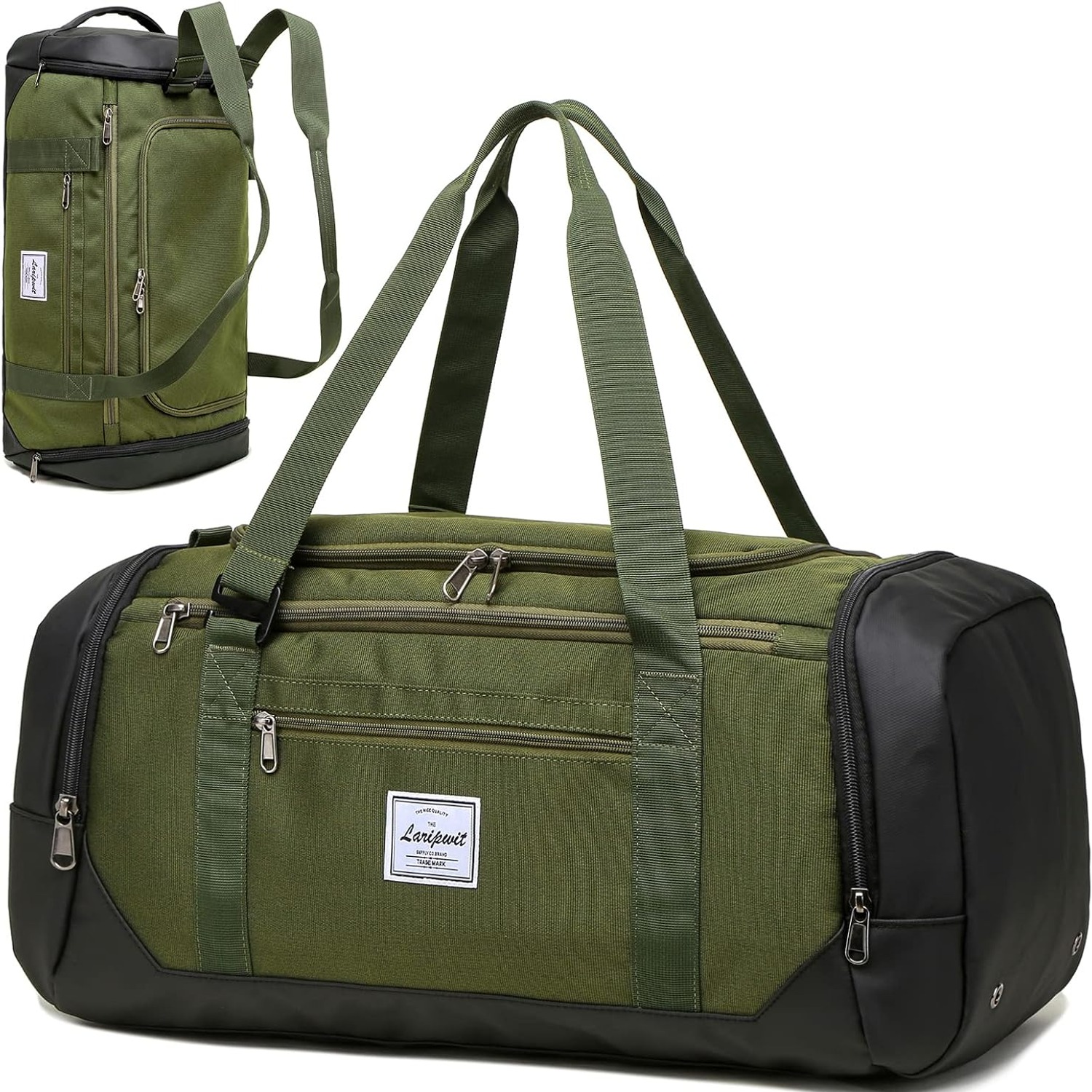
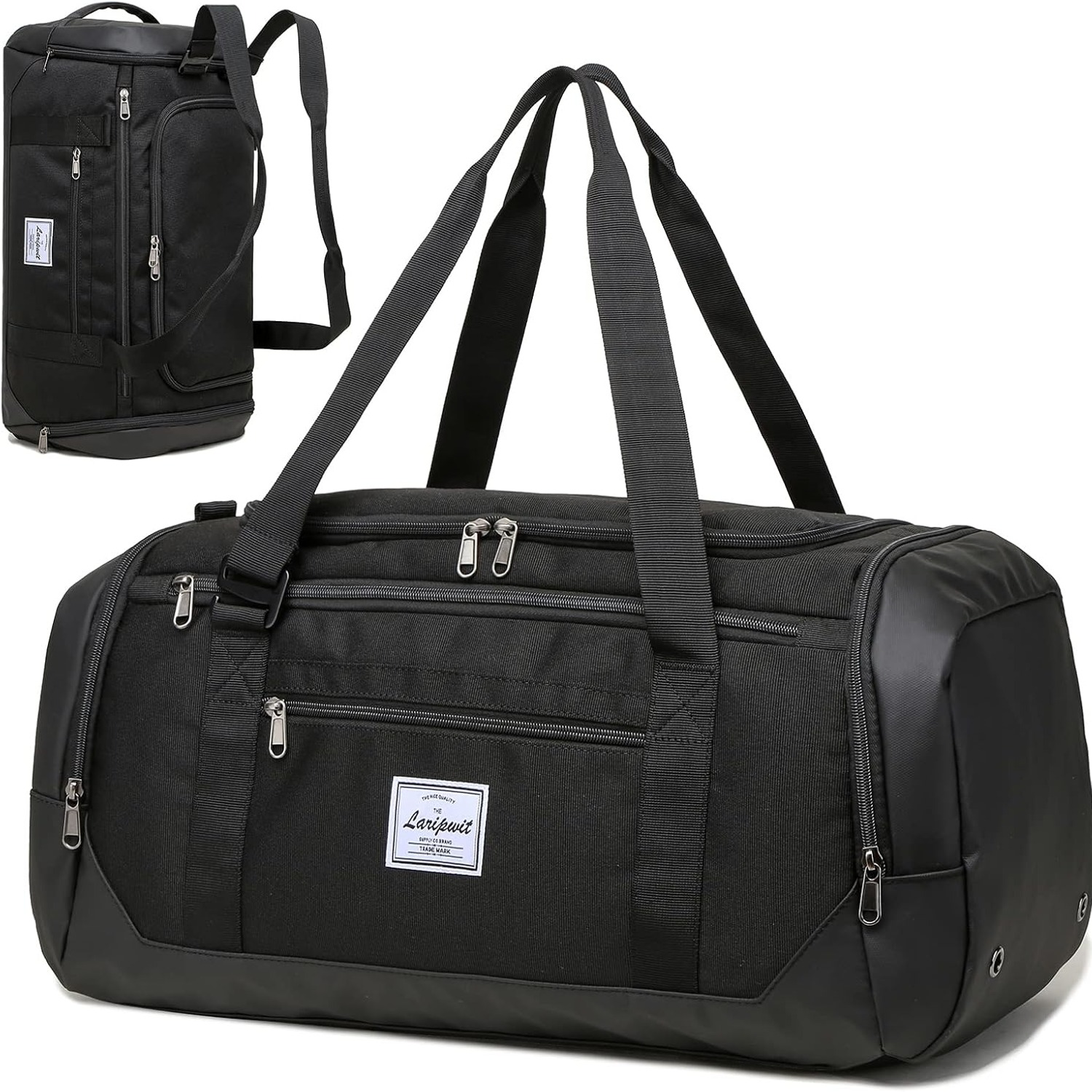
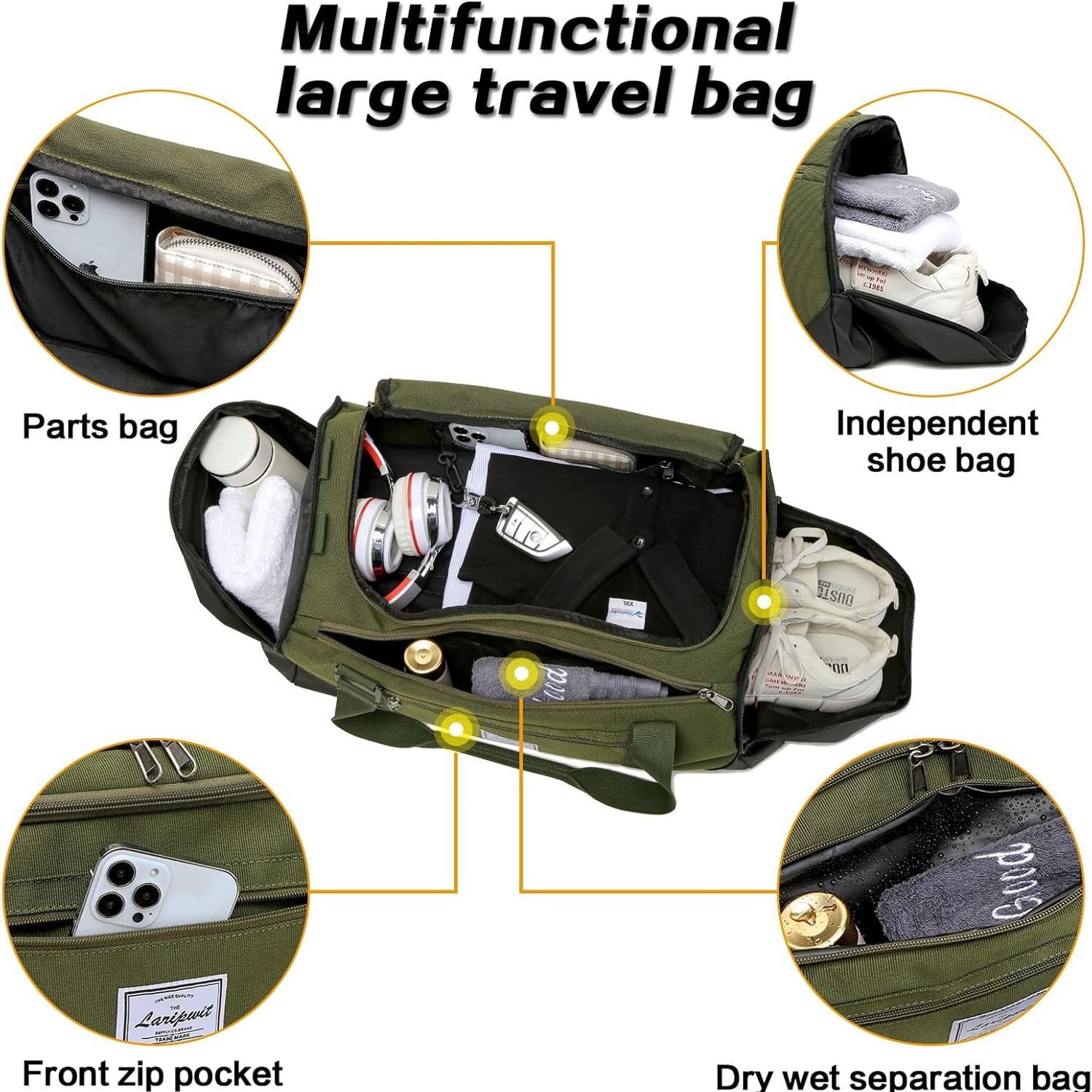
That is the whole reason compartmentalised duffels exist. Once you have used a bag that gives shoes their own breathable home and a damp towel its own pocket, going back to a plain sack feels like a step down. This 40 litre duffle is built around that idea. Six separate spaces, each with a job.
How the compartments are laid out
The main compartment is the big one and takes the bulk of your clothing. It opens wide, which matters more than people think, because a narrow opening means you end up stuffing things in sideways and losing track of what is in there.
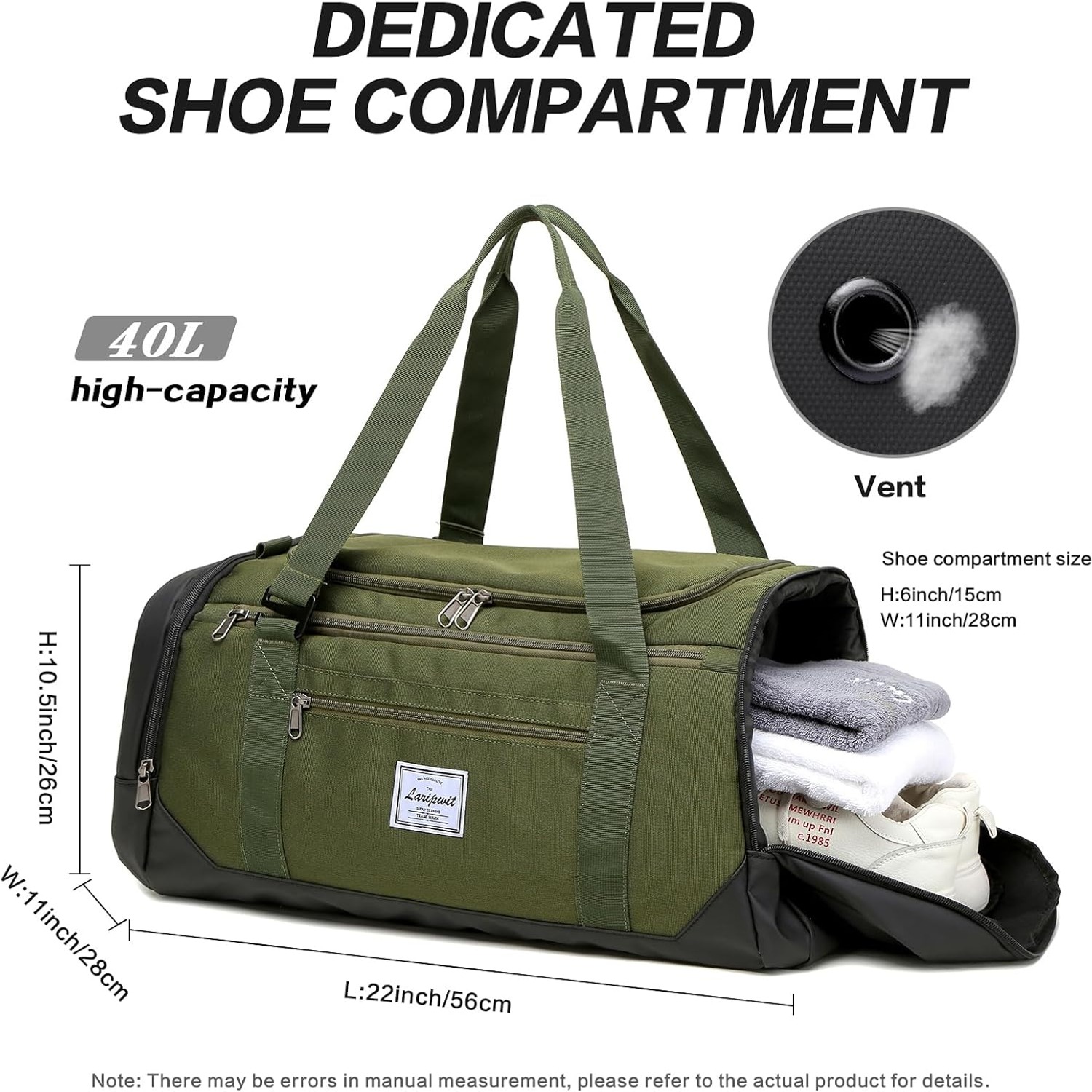
Underneath and to the side sits the independent shoe compartment. It is breathable, so air moves through it instead of being trapped against your clean clothes. Shoes go in from the outside, which means you never have to reach past them to get to your shirt.
At the front there is a wet pocket. This is the one that quietly saves your laundry. A towel after a swim, a top after a hard session, swim shorts after the pool, all of them go in there rather than against everything else. Then there is a front zip pocket for the things you want quickly, a side zip pocket for a bottle or a phone, and an inner zip pocket for keys, cards and the small stuff that otherwise disappears into the lining.
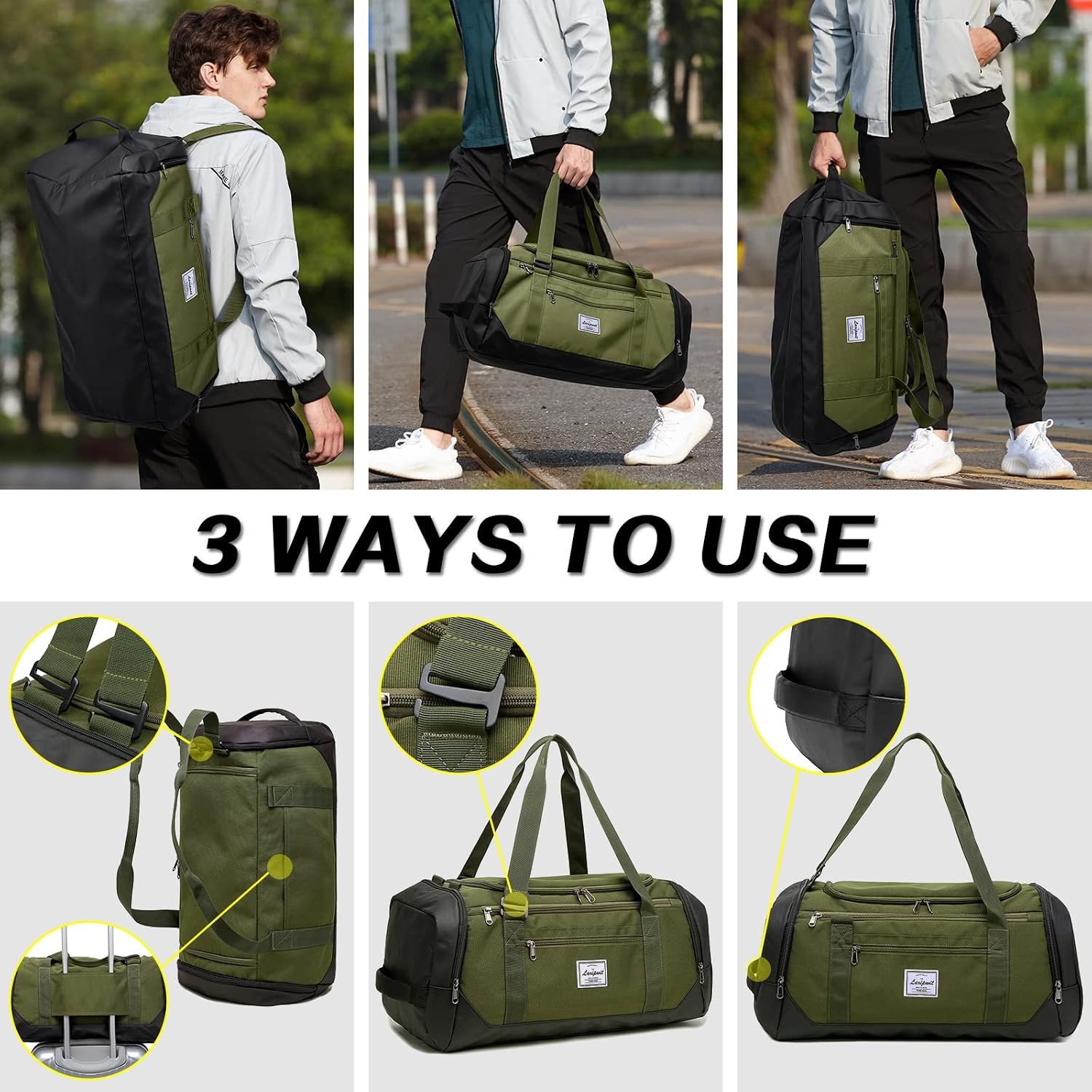
Two web hand straps sit on top for a short carry. On the back there is a luggage sleeve that slides over a suitcase handle, which turns it into a sensible travel duffle bag for men and women who are already wheeling a case through an airport.
Duffel or backpack, your choice
The straps on this bag are switchable. That sounds like a small feature until you are walking a mile from the station with a bag on one shoulder and a sore trapezius. Being able to swap to backpack carry spreads the weight across both shoulders and frees up your hands.
As a rough rule, use the shoulder strap for short distances and quick trips to the car. Switch to backpack mode for anything longer than about ten minutes of walking, for cycling, or for days when you are also carrying shopping, a coffee, or a child's school bag. A convertible duffel backpack earns its keep on exactly those days.
Is 40 litres the right size?
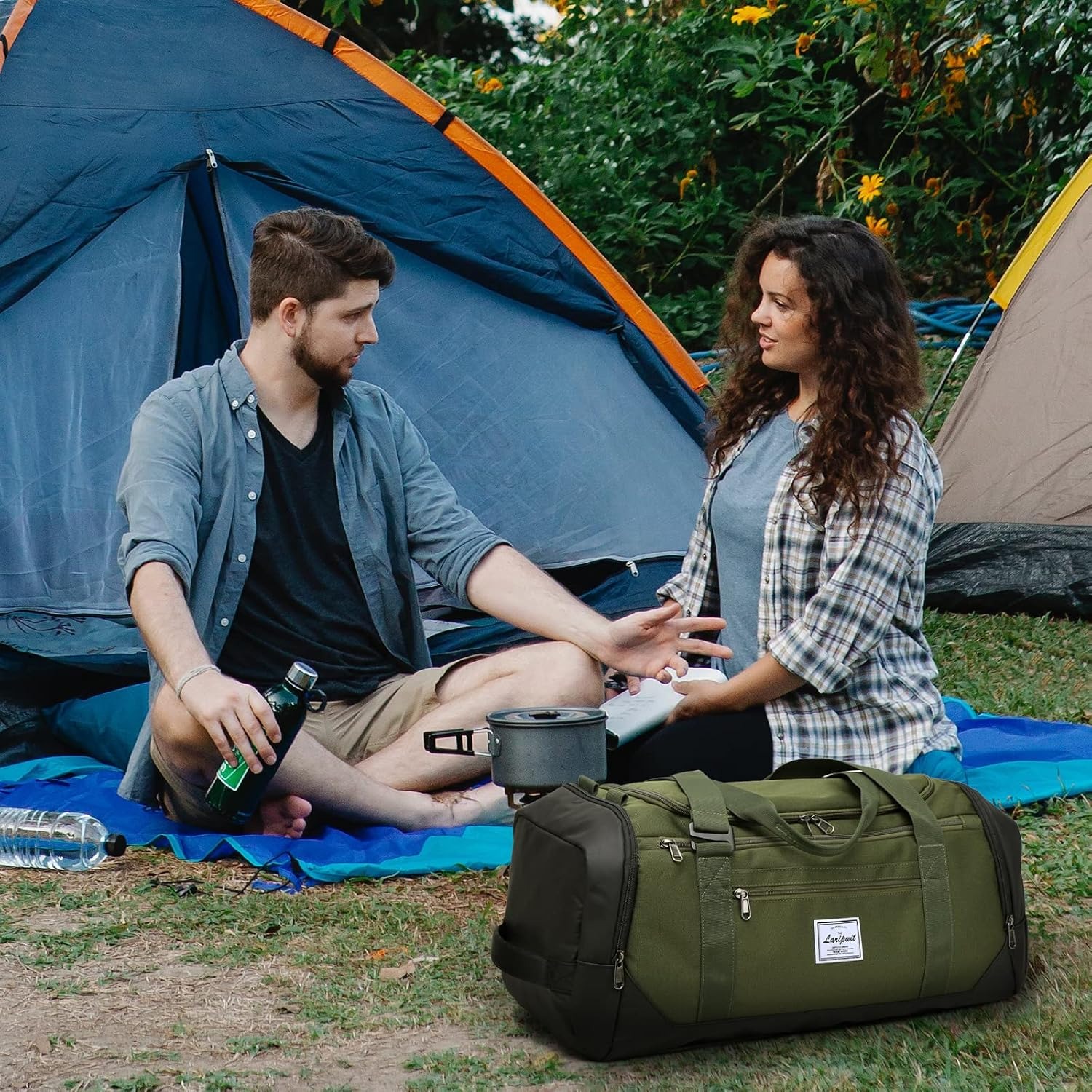
Forty litres is a useful middle ground. For gym use, it comfortably takes a change of clothes, a towel, a pair of trainers, a water bottle, a lock and toiletries, with room to spare. For travel it will cover clothing for a three to five day trip if you pack sensibly, which makes it a genuine weekender bag rather than just a sports holdall with ambitions.
If you are the kind of person who packs a single shirt and a toothbrush, 40 litres may be more than you need and a 25 to 30 litre bag will do. If you travel with a hair dryer, two pairs of shoes and a jacket, you will want something larger or a second bag. For most people doing four gym sessions a week and the occasional overnight stay, this size hits the mark.
The packed dimensions are 58.4 by 25.4 by 27.9 cm. That is a familiar cabin-friendly footprint, but airline rules vary and some carriers measure strictly. Check your specific airline before you rely on it as a carry on duffel bag.
Why the fabric matters
The body is 1000D polyester. The D stands for denier, a measure of how thick the yarn is. Higher denier generally means a tougher, more abrasion-resistant fabric. A 1000D weave is at the sturdy end of what you find in bags at this price, and it is the reason the bag copes with being dropped on gym floors, dragged across car boots and shoved under seats.
It is also described as water resistant. That is not the same as waterproof. Water resistant means light rain and splashes bead off rather than soaking straight through. It does not mean you can leave the bag out in a downpour or set it in a puddle and expect the contents to stay dry. If you commute by bike in a wet climate, a cover or a dry bag for your electronics is still worth having.
The fabric also resists wrinkling, so the bag looks presentable after months of being folded and crammed. Empty weight is 1.42 pounds, around 0.64 kg, which is light for a bag with this much structure.
Who it suits
This bag makes most sense for a few kinds of people. The regular gym-goer who trains on the way to or from work and needs shoes and a wet towel kept apart from a clean outfit. The weekend traveller who wants one bag for a two night trip. The parent running between swimming lessons and sports practice, where someone's damp kit is always coming home. And anyone who already owns a plain holdall and is tired of the laundry smell.
It suits men and women equally. The straps adjust and the shape is neutral, so nothing about it is gender specific beyond the way it tends to be marketed.
It is less suited to people who need a padded laptop section, serious outdoor expedition gear, or a waterproof dry bag for kayaking and similar. Those are different products with different priorities.
Looking after it
Care is straightforward. Spot clean with a damp cloth and mild soap, wipe off the residue, and let the bag air dry completely before you fold it away. Skip the washing machine, the tumble dryer, bleach and the iron, since all of them can damage the coating that gives the fabric its water resistance.
The habit that extends the life of any gym bag is emptying it the same day. Take the shoes out of the shoe compartment, pull the towel out of the wet pocket, unzip everything and leave it open somewhere with a bit of air. Moisture sitting in a closed bag overnight is what causes smells and, over time, degrades the lining.
Avoid overloading the zips. If a compartment is bulging and you are forcing the pull around a corner, repack instead. Zips are almost always the first thing to fail on a bag, and almost always because of that.
The short version
If your current gym bag is one big space and nothing else, this is a clear upgrade. Six compartments mean shoes, damp kit, clean clothes and small valuables each get their own spot. Forty litres covers a full gym kit or a few days of travel. The switchable straps let you carry it the way the day demands, and 1000D water-resistant polyester handles the rough treatment that gym bags get.
It is light at 1.42 pounds, it folds away when you are not using it, and the luggage sleeve on the back makes it work alongside a suitcase. For a bag that has to be a sports bag on Monday and an overnight bag on Friday, that is a sensible set of features.