
The complete guide
How to Choose a Small Gym Bag That Actually Fits Your Routine
The problem with most gym bags
Walk into any changing room and you will see two kinds of bag. The first is a flat tote that slumps on the bench, swallows everything into one dark cavity and sends you fishing around for your car keys while someone waits for the locker. The second is a 50 litre holdall that someone bought for a holiday and now uses for a 45 minute session. It is too big for the locker, too big for the footwell, and it mostly travels half empty.
The middle ground is where the useful bags live. A small gym bag around 18 litres carries the kit you actually use: a change of clothes, shoes, a towel, a bottle, a padlock, maybe a protein shake. It does not tempt you to pack things "just in case", and it does not take up the whole back seat.
What 18 litres really holds
Numbers on a page are hard to picture, so here is a practical version. In a bag of this size you can realistically fit a t-shirt, shorts or leggings, socks, underwear, a small towel, a pair of training shoes and a 750 ml bottle. Add a hoodie and it starts to get snug. Add a second pair of shoes and you are over.
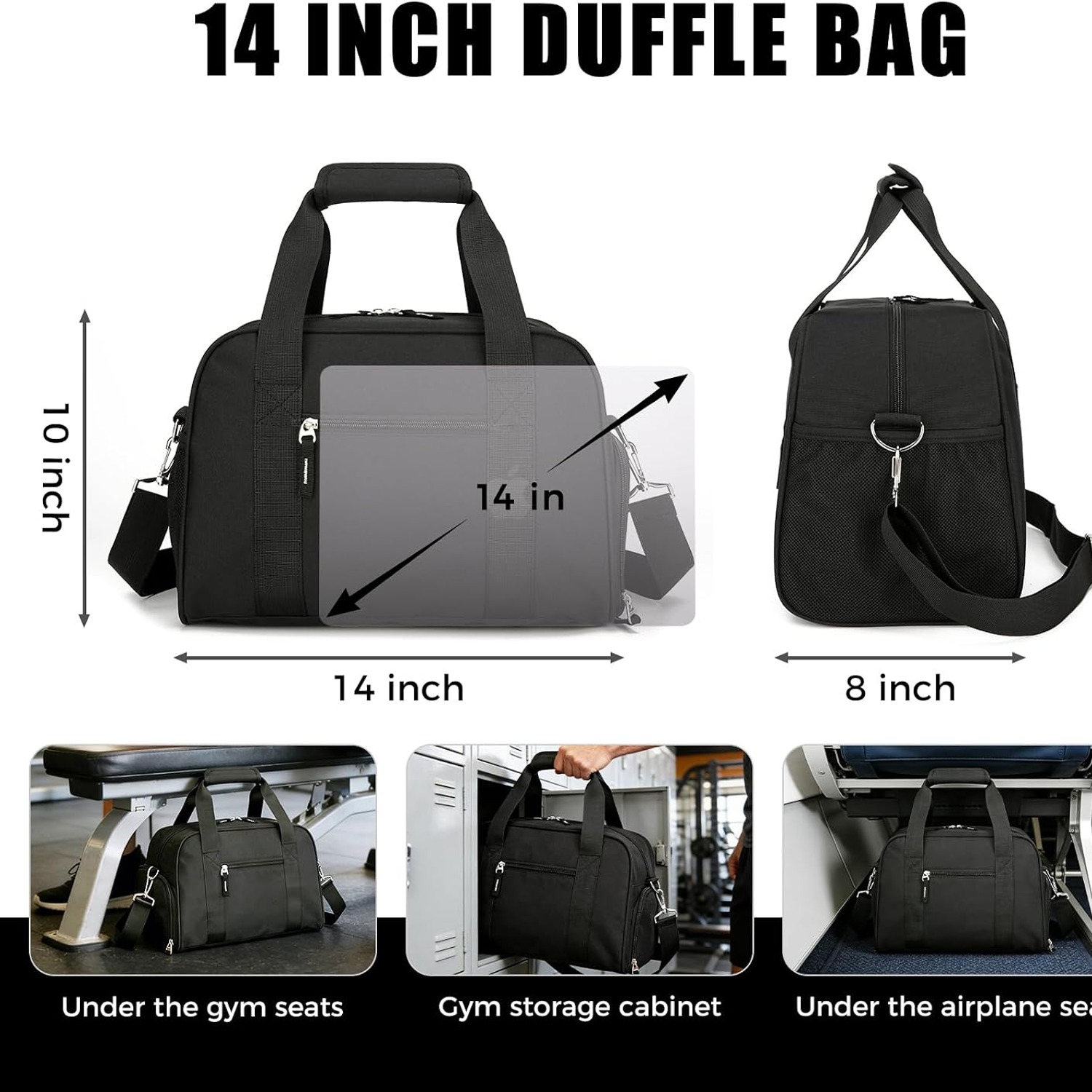
The external measurements are 35.5 cm long, 20 cm wide and 25.5 cm high, roughly 14 by 8 by 10 inches. That is deliberately shaped to go under a gym bench or into a standard storage cabinet rather than being left on the floor where people trip over it. For anyone who trains straight after work, a compact sports bag you can tuck away is less hassle than something that needs its own parking space.
Why the shoe compartment matters more than you think
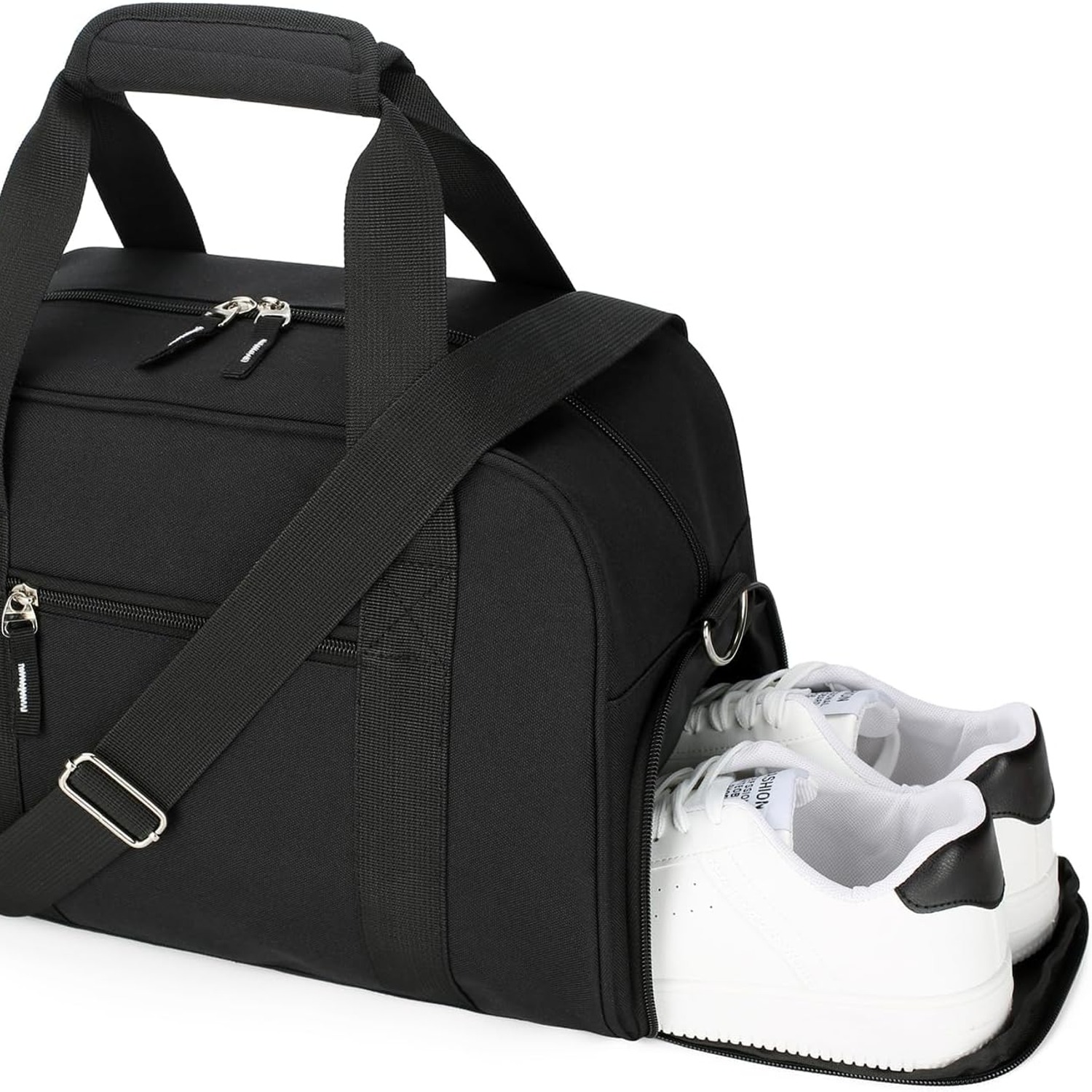
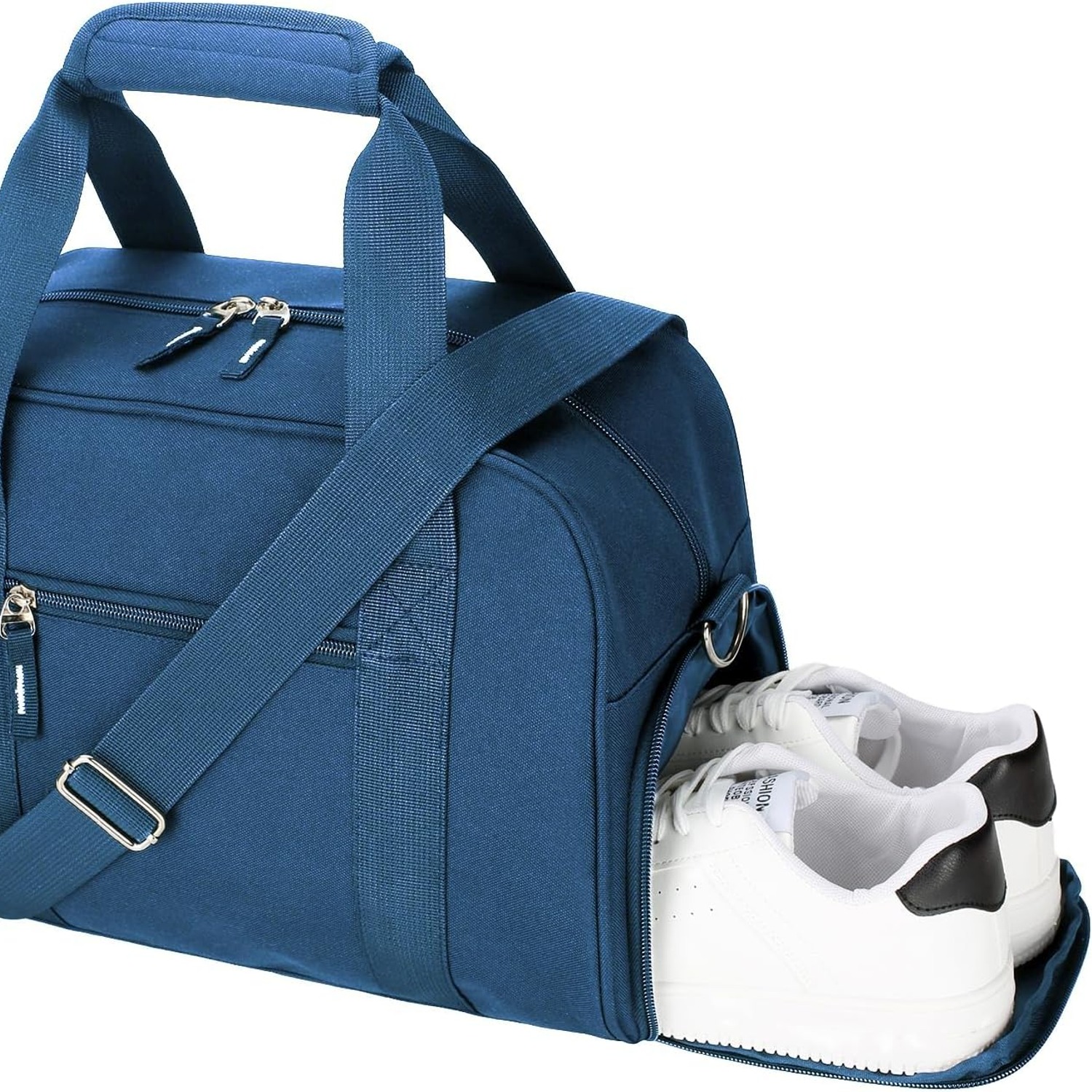
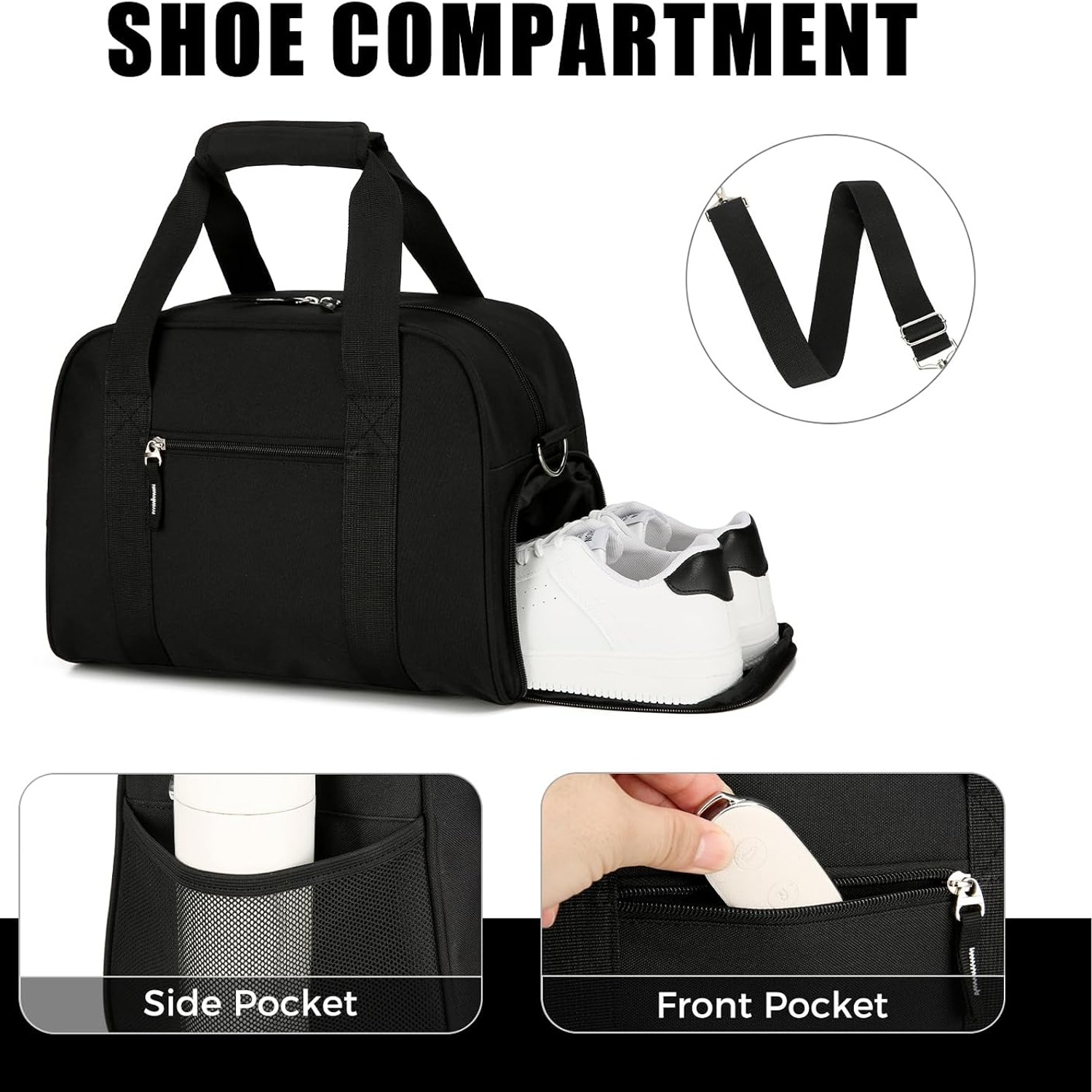
A separate shoe section sounds like a small feature until you use a bag without one. Trainers pick up whatever is on the floor: gym dust, chalk, grit from the car park, rain from the walk in. In a single-compartment bag, all of that ends up pressed against the clean shirt you planned to wear afterwards.
This bag splits them out properly. The shoes go in their own compartment, clothes go in the main zip section, and the two do not meet. It also helps with drying, since you can open just the shoe section when you get home and leave the rest zipped.
There are two other pockets worth knowing about. The front zip pocket is the one you will use most, because it is where keys, a phone, a card and headphones live. The side mesh pocket takes a bottle, or a damp towel you do not want sitting against everything else.
The frame makes daily use easier
Most soft duffles collapse the moment you take the contents out. That sounds trivial, but it has real effects. A collapsed bag is harder to pack because the opening closes on itself. It is harder to search because everything slides into the bottom corner. And it looks messy sitting in a hallway.
This one has a built-in frame that holds the shape upright whether it is full or empty. You can set it on a bench, open the main zip and it stays open. You can pack it one-handed while you are still holding a coffee. It also keeps a neat profile if you are carrying it into an office rather than a changing room.
The trade-off with structure is usually weight, and this is where the 470 g figure matters. Half a kilo empty is light for a framed bag. The weight you carry is your gear, not the bag.
Carrying options and when each one helps
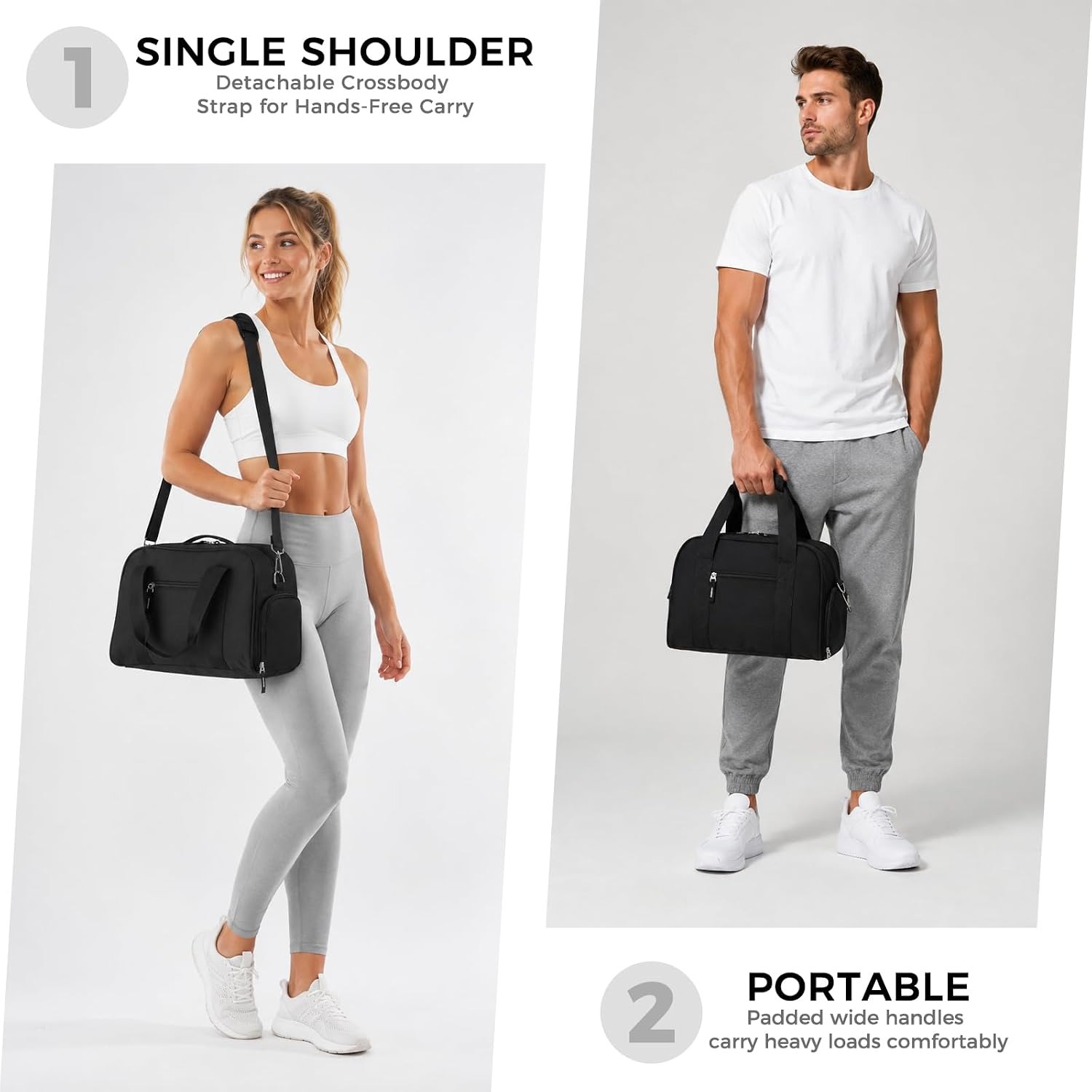
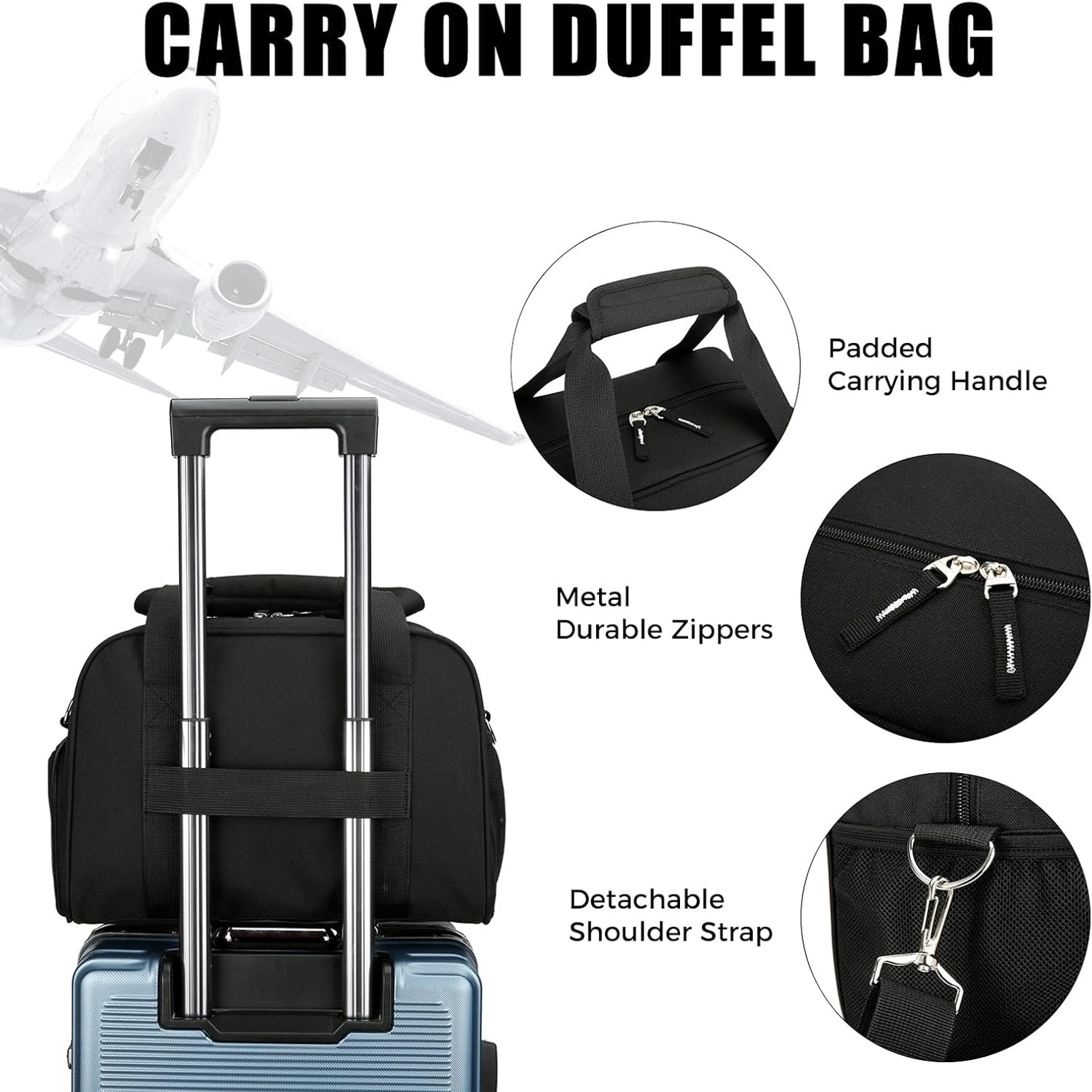
There is a thick top handle and an adjustable shoulder strap, and the strap detaches completely.
For a short carry, the car to the gym door, the handle is quicker and feels more natural. For anything longer, a walk from the station or a ride on a crowded bus, the shoulder strap moves the weight onto your body and frees up a hand. Being able to take the strap off is genuinely useful on a plane, where a dangling strap catches on seat backs, or in a meeting room where you want the bag to look tidy under a chair.
If you tend to walk 20 minutes or more with your kit, adjust the strap so the bag sits close to your hip rather than swinging low. It is more stable and less tiring.
The fabric and what water resistant actually means
The shell is polyester with an inner PVC coating, rated water resistant. In plain terms, that means a rainy walk is fine, a puddle splash is fine, and a wet locker-room floor is fine. It does not mean you can leave it outside in a storm or dunk it in a lake. Water resistant fabric buys you time, not immunity.
The practical benefit is on the inside too. A coated lining is easier to wipe out if a bottle leaks or a damp towel gets forgotten. That is worth more over a year of use than any marketing claim about toughness.
Jet black is a sensible choice for a bag that lives this kind of life. Scuffs and marks that would stand out on a light colour simply do not show.
Who this suits
This size works best for people with a regular, repeatable routine. Gym three or four times a week, five-a-side on a Thursday, a swim at the weekend. It is also a good choice for anyone who wants a small duffle bag for men or a gym bag for women without the sizing being gendered, since the shape and colour are plain.
It doubles as a one-night bag. For a single overnight stay, 18 litres covers clothes, a wash bag and a charger. For two nights or more, be honest with yourself and take something bigger. A bag that is stuffed to bursting fails faster at the zips and is uncomfortable to carry.
It is less suited to anyone who needs to carry a laptop daily, since there is no padded sleeve, or to people who train in boots and heavy outerwear, which eat capacity quickly.
Looking after it
Care here is simple and it pays off. Wipe the outside with a damp cloth and a little mild soap when it gets marked, then let it air dry fully. Keep it out of the washing machine and the tumble dryer, because heat and spinning can crack the coating, warp the frame and strain the zips.
The habit that matters most is airing. Unload the shoe compartment the same day, leave the bag unzipped overnight and it will not develop that locker-room smell. Store it dry and open rather than zipped shut in a cupboard, since trapped moisture is what causes musty lining.
Zips last longer if you do not force them around a corner. If one catches, back it off and reposition the contents rather than pulling harder.
How to decide between sizes
If you are torn between this and something larger, write down what you carried last week. Most people overestimate. If your list is clothes, shoes, towel and a bottle, 18 litres is correct and anything bigger will travel part empty.
If your list includes a jacket, two pairs of shoes, a laptop and lunch, you want a bigger bag or a backpack with a laptop section. Buying the right size the first time is cheaper than buying twice.
The short version
This is a 14 inch, 18 litre duffle in jet black polyester with a water-resistant coating. It has four compartments including a separate shoe section, a top handle and a removable shoulder strap, and a frame that keeps it standing upright. It weighs 470 g empty and fits under a gym bench or into most lockers.
If your training kit is clothes, shoes, a towel and a bottle, it is the right size. If you regularly pack more than that, go bigger. For everyone in the first group, this is a tidy, practical bag that does its job without getting in the way.