
The complete guide
How to Choose a Leather Journal You Will Actually Fill
The notebook problem
Most people have a drawer with two or three half-used notebooks in it. One is too big to carry. One has lines that are too narrow. One was nice enough that nobody wanted to spoil the first page. They all stopped at page nine.
A journal only works if you take it with you and stop treating it as precious. That comes down to a few boring, practical things: size, how it closes, whether the pages suit how you actually write, and whether it can survive a bag. Get those right and the book fills itself. Get them wrong and you end up with another ornament.
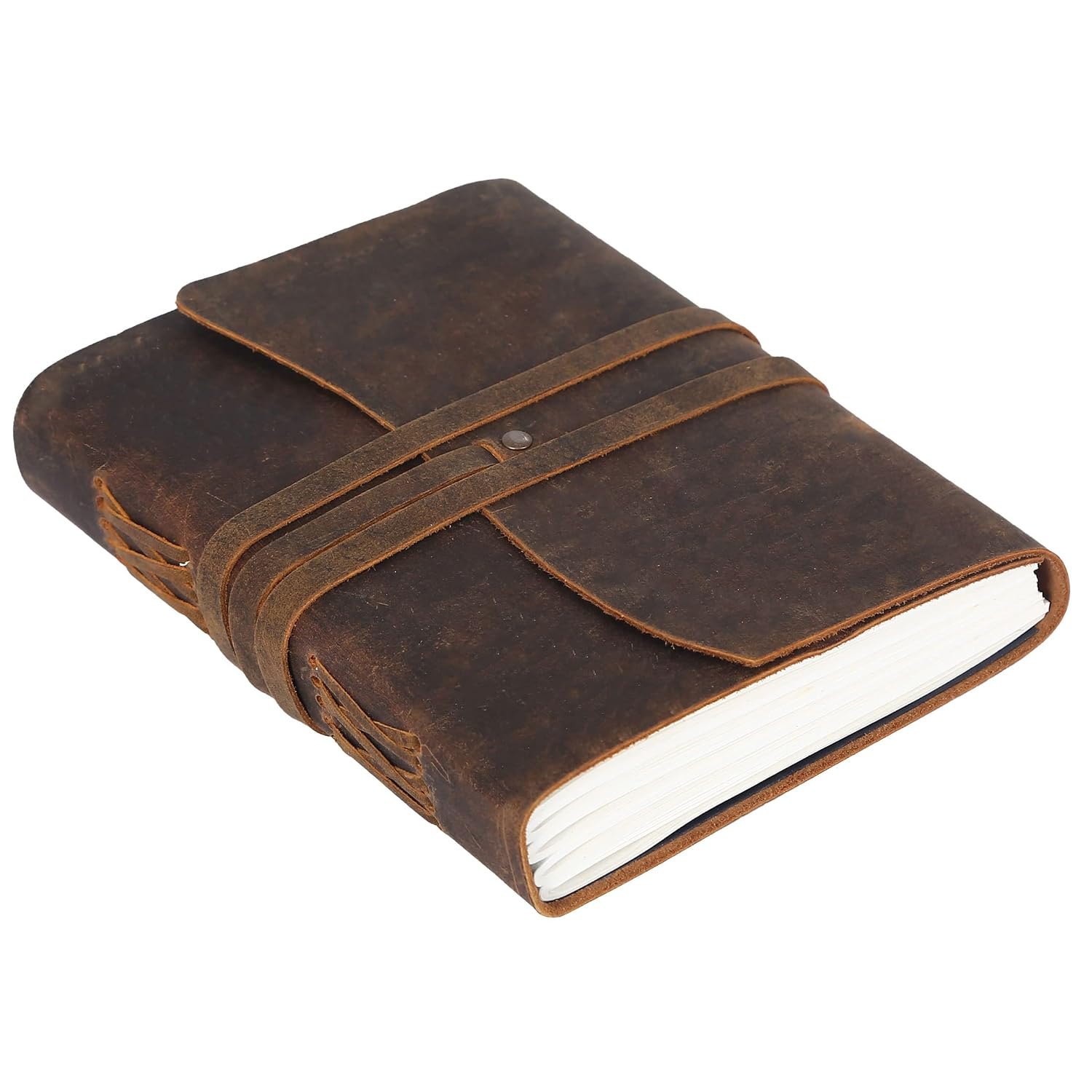
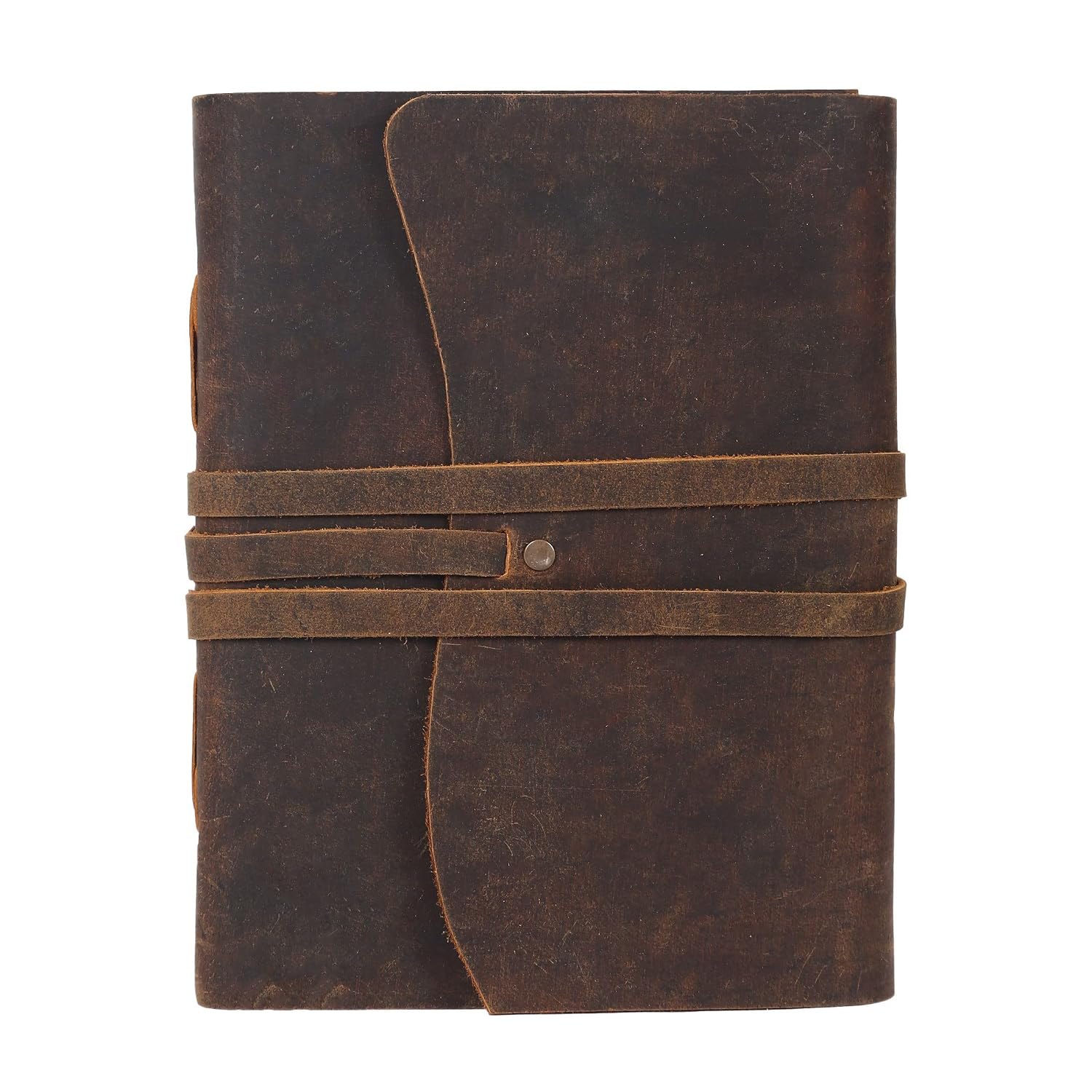
This guide walks through what matters when you are picking a leather journal for men or anyone else, using this one as the reference point.
Why leather, and what it does over time
Leather is a strange material to choose if you only think about day one. A card cover is lighter and cheaper. A plastic cover wipes clean. Leather costs more and gets scratched.
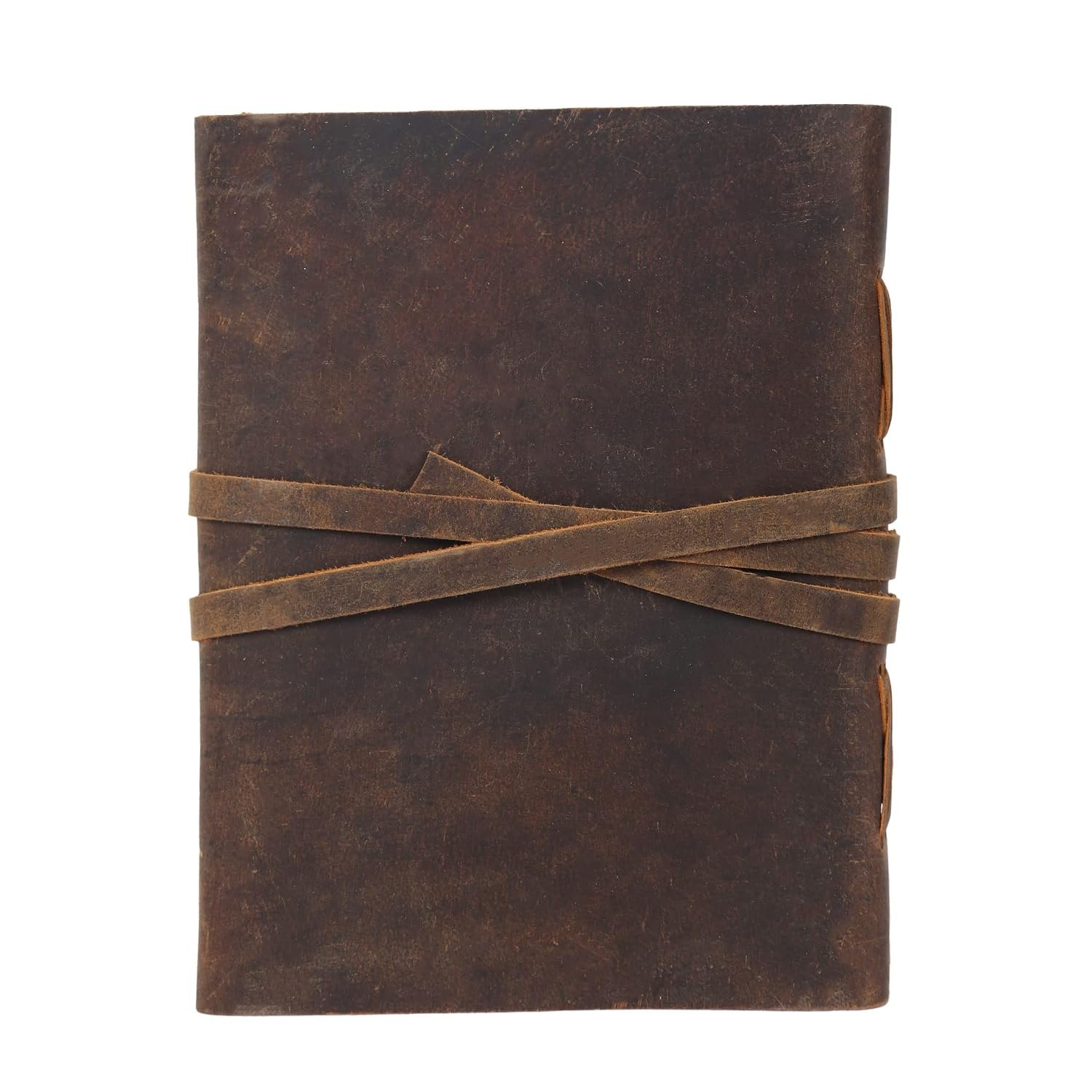
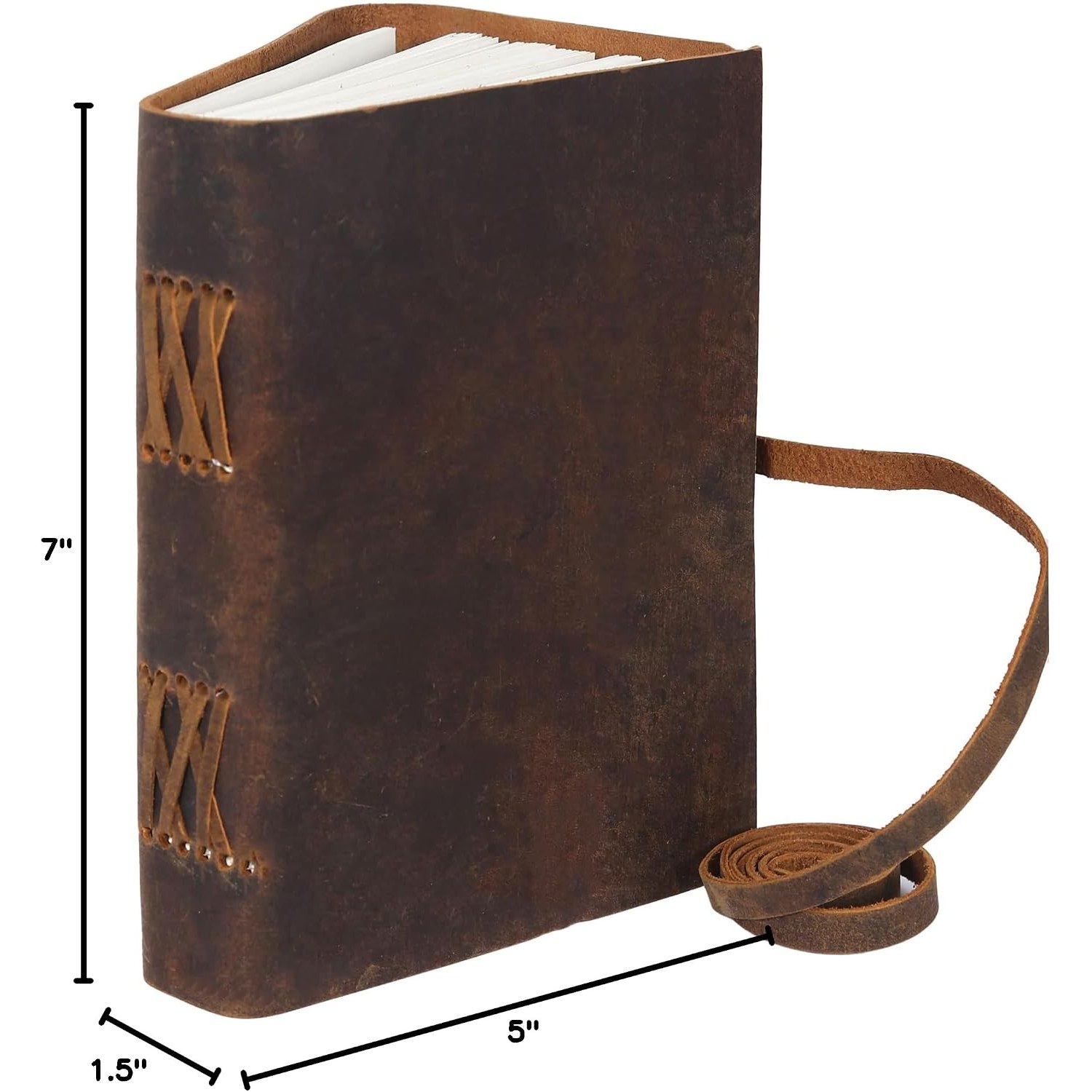
The difference shows up later. Card corners curl and tear within a few months of being shoved in and out of a bag. Leather scuffs instead, and the scuffs blend into the surface rather than ruining it. The cover on this journal is brown tan leather in a vintage finish with a raw hand-cut edge, so it already starts with some character and adds more as you carry it. Six months of daily handling darkens the high points and softens the whole cover.
That is the real argument for a handmade leather notebook. It is not that it looks good in a photograph. It is that it looks better after being used badly than most alternatives look new.
Size: the thing people get wrong most often
The sheet size here is 5 x 7 inches, with the whole book measuring 17.8 cm long, 12.7 cm wide and roughly 3.8 cm thick. It weighs 310 grams.
That size sits in a useful middle. A pocket notebook at around 9 x 14 cm is great for a shopping list and hopeless for a page of thinking. A full A4 journal gives you room to spread out but stays on the desk, which means it misses every idea you had on a train. Something in the 5 x 7 range is big enough to write a proper paragraph or sketch a scene, and small enough to live in a daypack, a handbag or a large coat pocket.
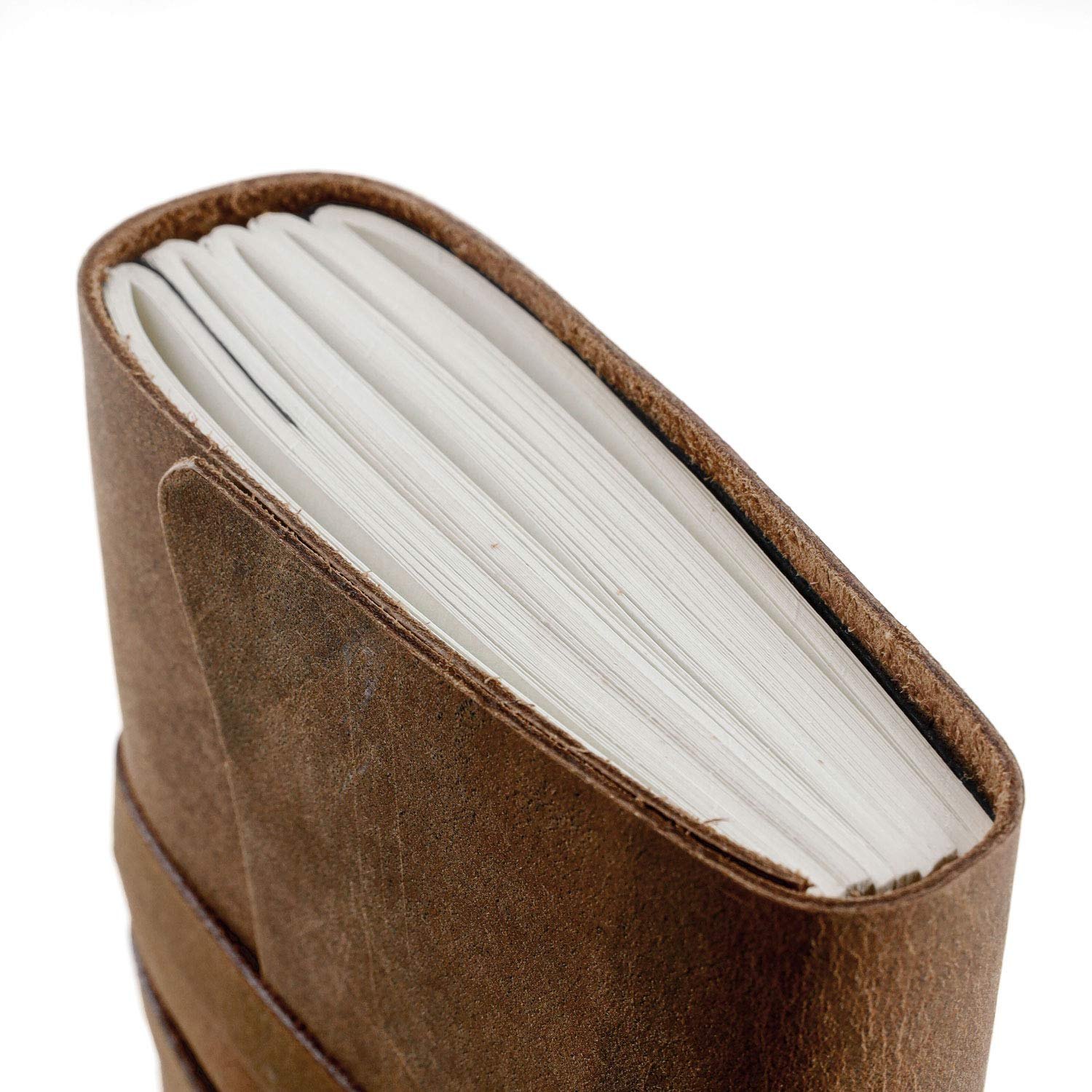
The thickness is worth noting too. At nearly 4 cm, this is a substantial block, not a slim pad. That is good if you want one book to last a long stretch. It is less good if you want something feather light for a hiking trip where every gram counts.
Plain pages and why they matter
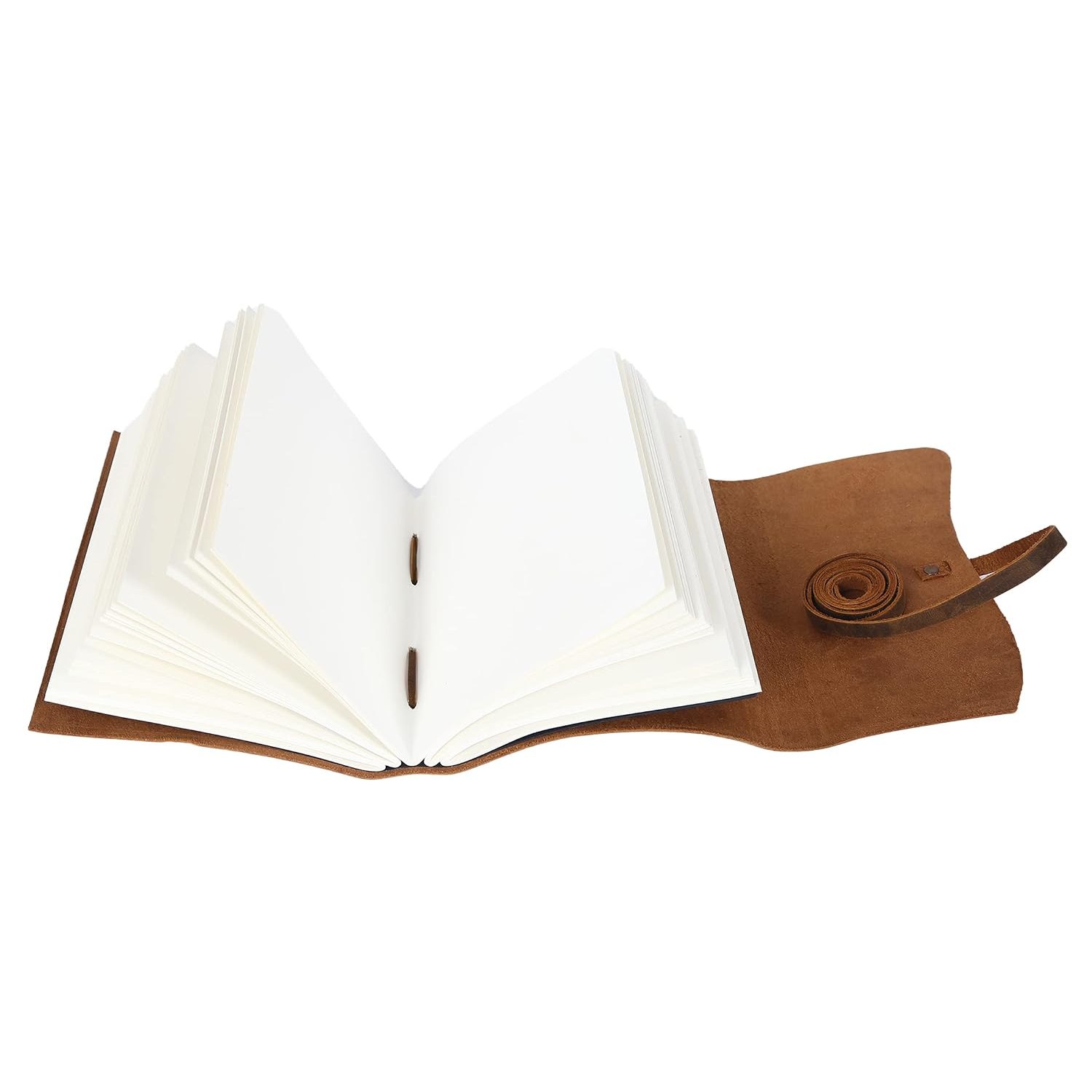
The ruling type is plain, which means no lines, no dots and no grid. Some people see that and hesitate. It is worth understanding what you gain.
Lines are helpful for one job: keeping handwriting tidy in rows. They get in the way of everything else. Sketches, diagrams, margin notes, big headings, pasted-in photos, mind maps, anything that is not a straight row of text has to fight the lines or ignore them.
A plain page journal lets one book do several jobs at once. You can write a long entry on the left page and draw the view out the window on the right. You can tape in a ticket stub without the lines showing through. If you want structure, you draw it yourself with a ruler or a pencil guide sheet slipped underneath.
For artists, this is simply a leather sketchbook with a nice cover. For writers, it is clean space. For people doing both, it is the only sensible choice.
The string closure and the bookmark
Small features that do not sound like much end up mattering daily.
The string wraps around the outside and holds the covers shut. Without something like that, a thick book carried in a bag fans open, the outer pages crease, and anything loose tucked inside falls out. The string also doubles as a holder for a folded receipt or a business card you want to deal with later. There is no buckle, no magnet and no elastic to perish, which is one less thing to break in five years.
The bookmark saves time in a way that sounds trivial until you use a thick blank book without one. There are no page numbers and no visual landmarks, so finding your last entry means thumbing through and scanning handwriting. The bookmark removes that step entirely.
Who this suits, and who should look elsewhere
This kind of journal suits people who write or draw by hand on a regular basis and want one book that handles a range of uses. Travellers, students, hobby artists, people keeping a work log, anyone building a commonplace book of quotes and clippings. It also works well as a leather gift for writers, because you do not need to know their preferences beyond the fact that they like paper.
It is less suited to a few cases. If you need strict lined ruling for neat daily logs, blank pages will frustrate you. If you want a cover you can refill with new inserts every year, this is a bound book rather than a refillable system, and refill options are not specified by the maker. If you use wet fountain ink or heavy washes, test a back page first, because the paper weight is not listed and handmade stock varies.
Giving one as a gift
A journal is one of the easier gifts to get right, partly because the recipient decides what it becomes. A mens leather diary, a recipe book, a travel log, a sketch pad, a place to keep lists. The format does not push them in any direction.
Two tips if you are gifting it. First, write something on the inside front cover. A date and a line about why you chose it turns a notebook into a keepsake, and it stops the blank-first-page paralysis that kills so many journals. Second, consider pairing it with a pen the person already likes, since no pen is included here.
Looking after it
Leather care is simpler than people expect. Keep the journal dry and out of long stretches of direct sun, which is what fades and dries a cover faster than anything else. Wipe it with a soft dry cloth when it gets dusty.
If it gets rained on, blot the outside and let it dry at room temperature. Keep it away from radiators and hairdryers, because fast heat stiffens leather and can crack it. Every six months or so, a very small amount of plain leather conditioner rubbed in with a cloth keeps the cover supple. Test on the back cover first, since conditioners can darken leather.
Do not store it flat under a stack of heavy books for months at a time. The string wrap can leave a permanent impression in a compressed cover.
The short version
A journal is a tool you carry, not an object you admire. This one is 17.8 by 12.7 cm, about 3.8 cm thick and 310 grams, with a brown tan leather cover, blank 5 x 7 inch pages, a bookmark and a string closure. Those specs add up to a book that fits a bag, survives being carried, and does not tell you how to use it.
If you want lines, buy lined. If you want slim and pocket-sized, buy smaller. If you want one solid book that takes writing, sketching and whatever you paste in, and looks better as it ages, this is the shape of thing to get.